Context
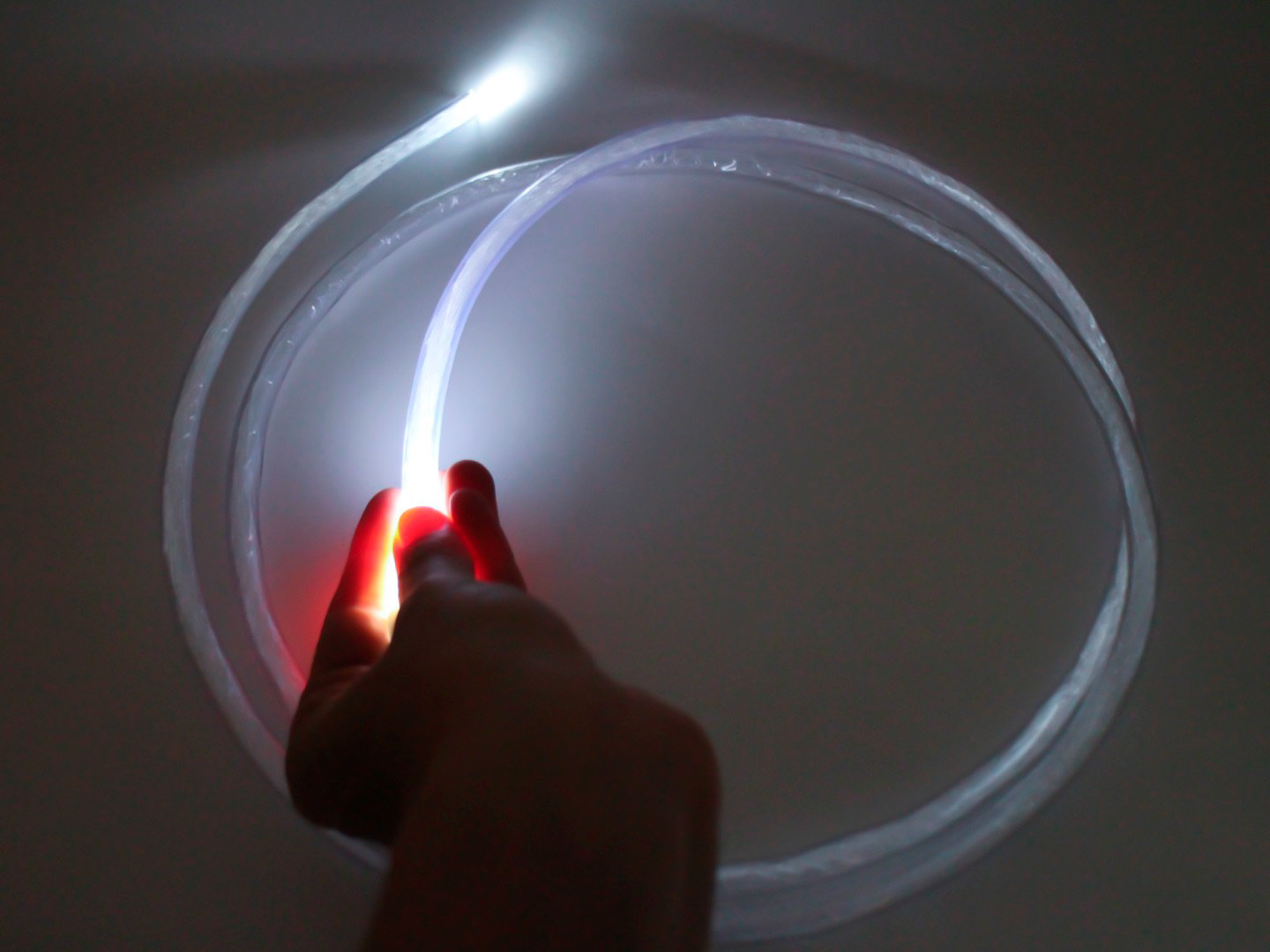
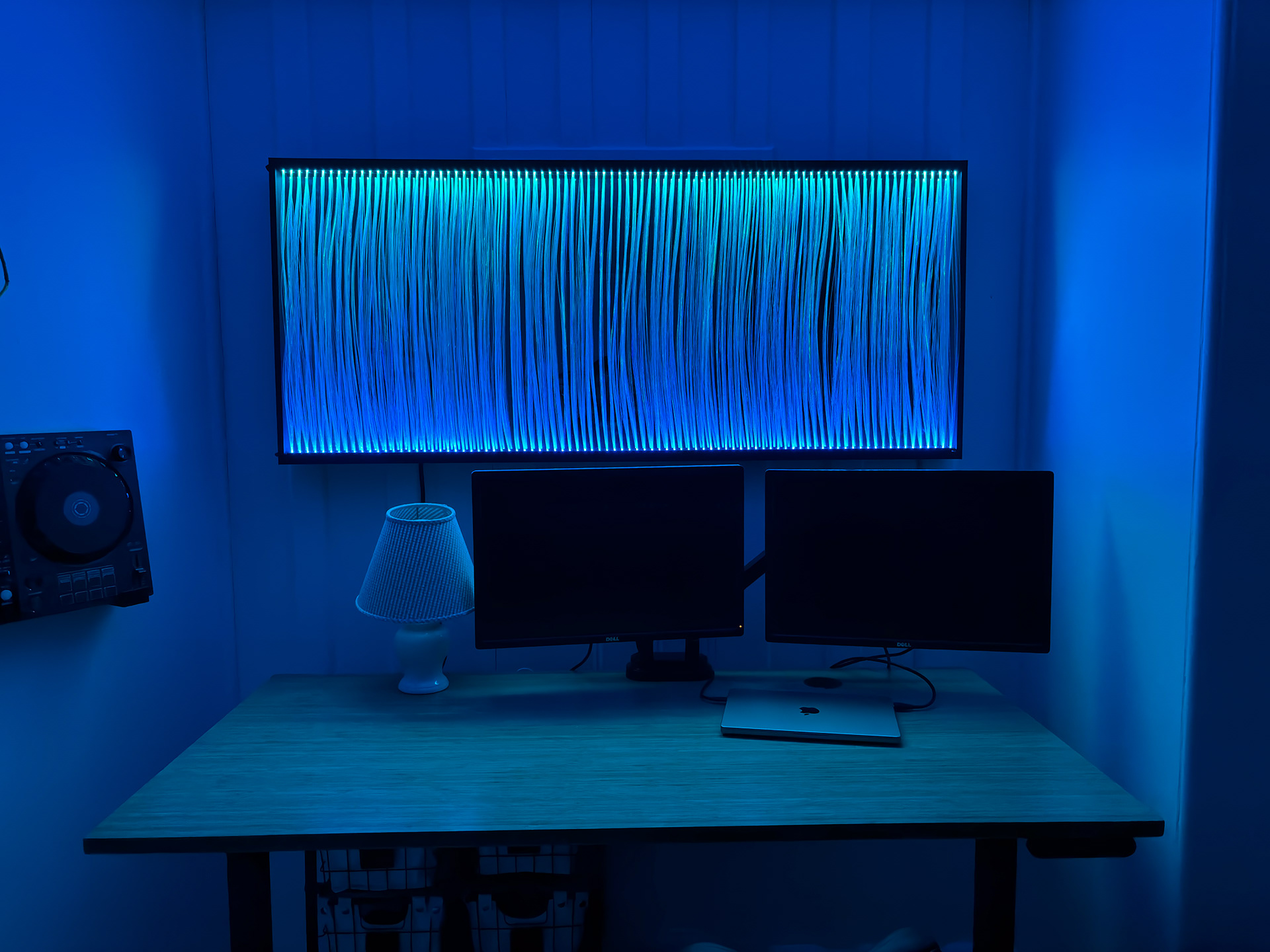
Optical fibers transmit light through thin glass or plastic strands using total internal reflection, enabling high-speed data transfer and dynamic lighting. Beyond telecom and medical uses, it has become a powerful artistic medium, shaping light in space. This project explores optical fiber's potential to blend and diffuse light from two directions.
Approach
materials
- 2,860ft (yes, really) optical fiber, .03" diameter, PMMA end glow
- WS2812B LEDs (5V)
- Meanwell LRS-100-5 power supply (5V)
- Black PLA filament
- Loctite super glue
- UV resin
- 14 AWG power cord (rated for 15A+)
- XIAO ESP32C3
- Basic electrical components (resistors, wire, in-line switch, push button, perfboard)
- Soldering materials
- IKEA NISSEDAL mirror
Making
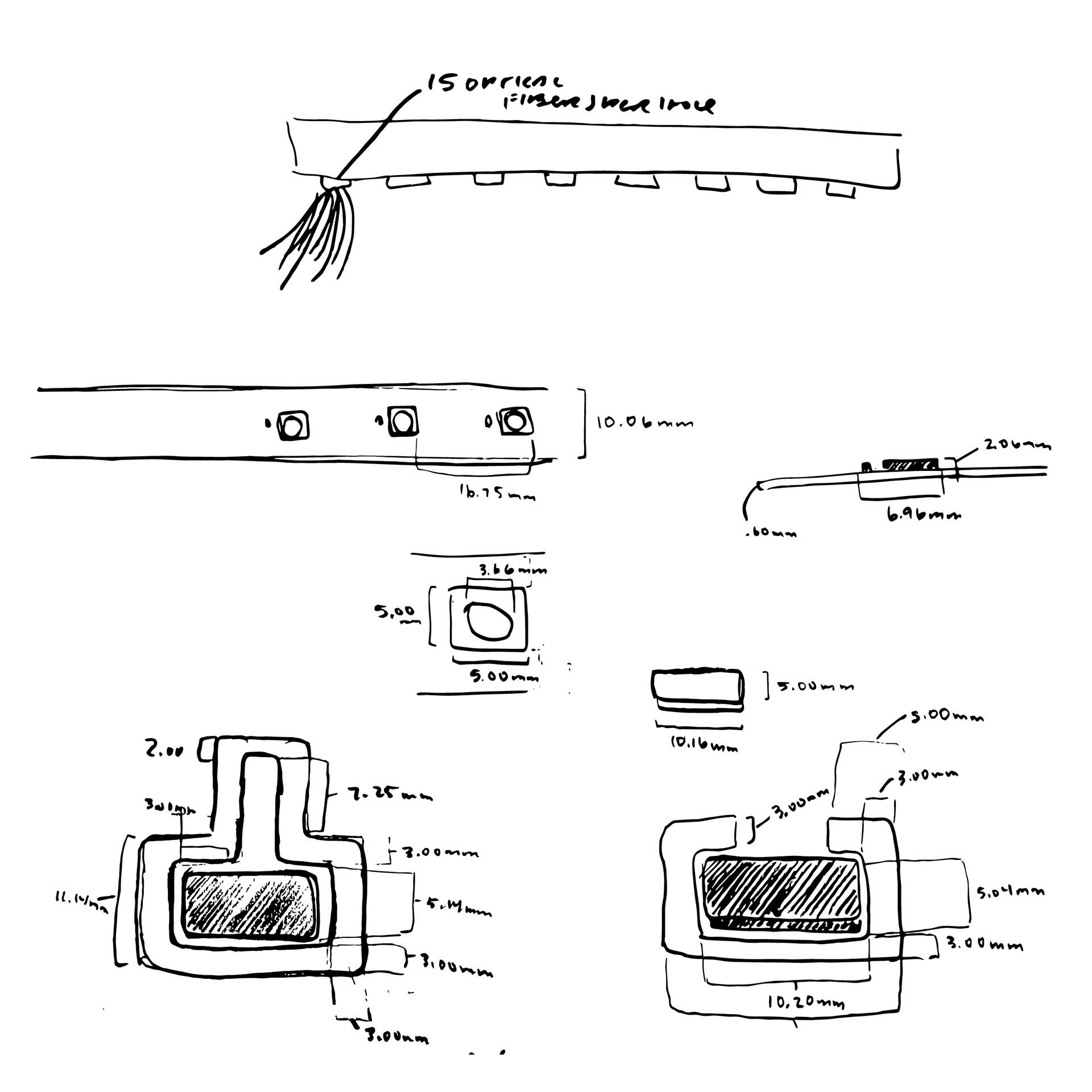
- Sketch out concept — what should it look like? what fabrication steps need to be taken?
- 3D model LED holders — start by measuring LED strip size, then model on Fusion 360
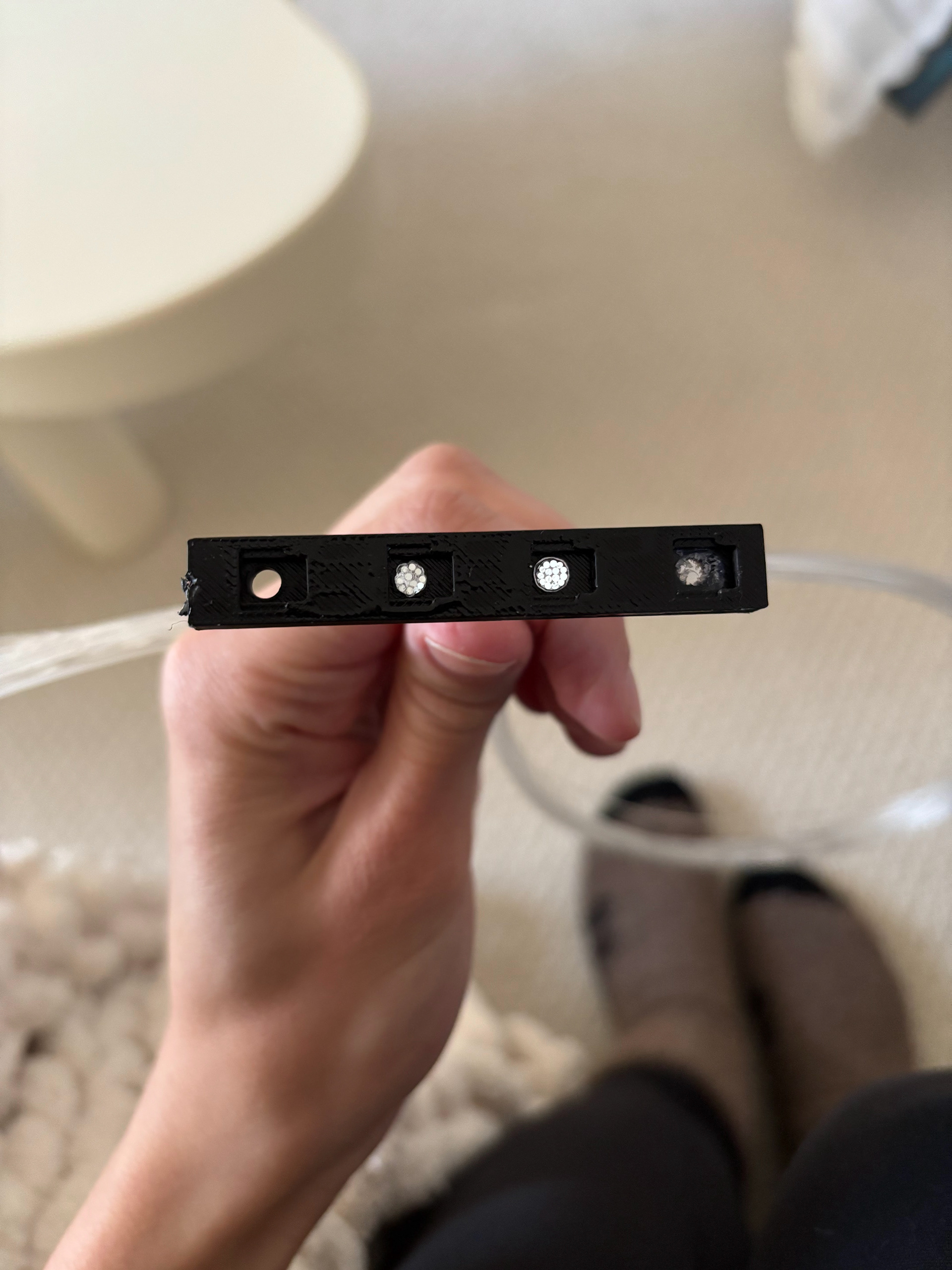
- 3D print LED holders — print off, check fit, adjust model, rinse, repeat
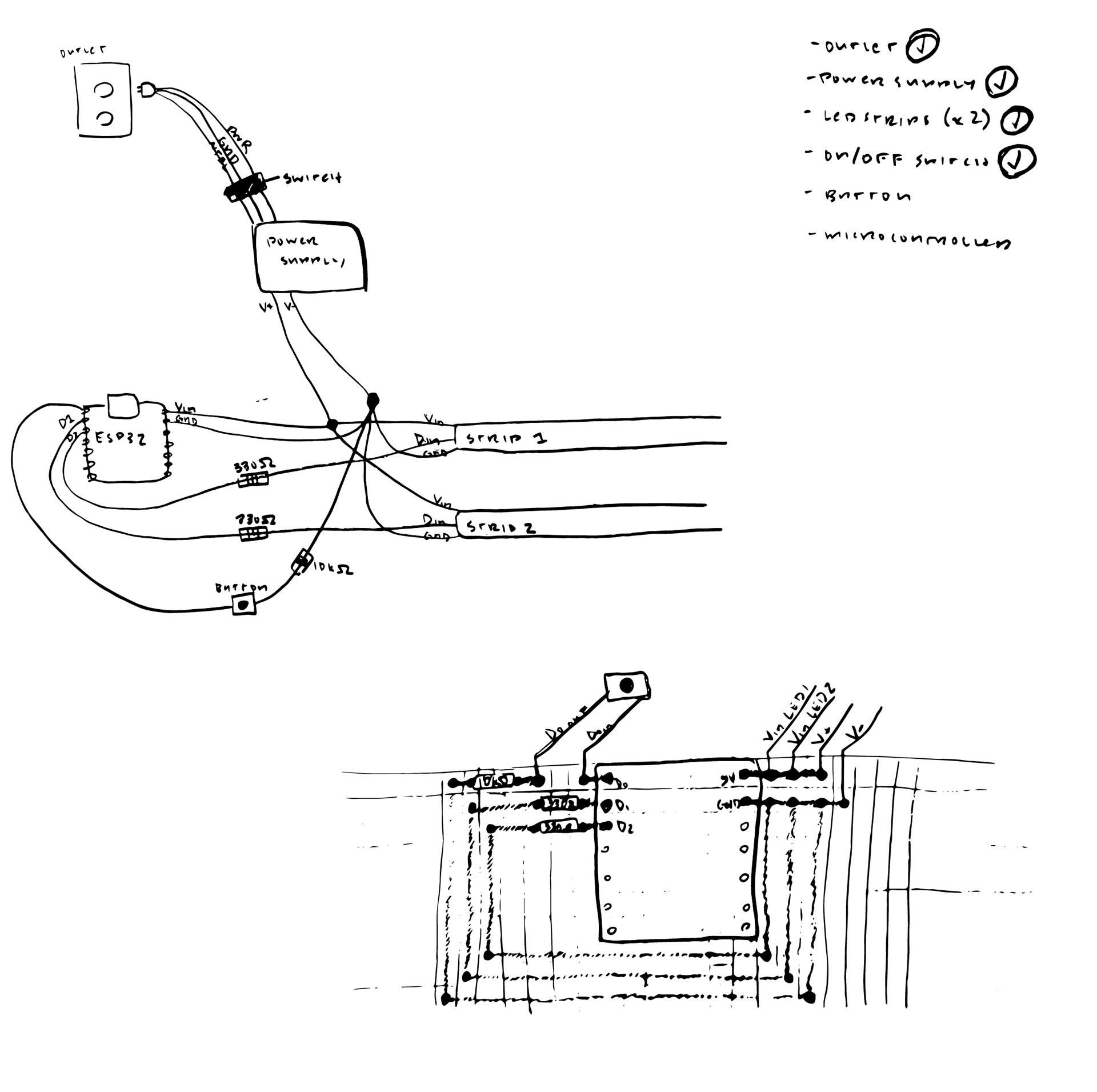
- Create circuit diagram — list out hardware components, verify hardware is supported by libraries (ex. FastLED)
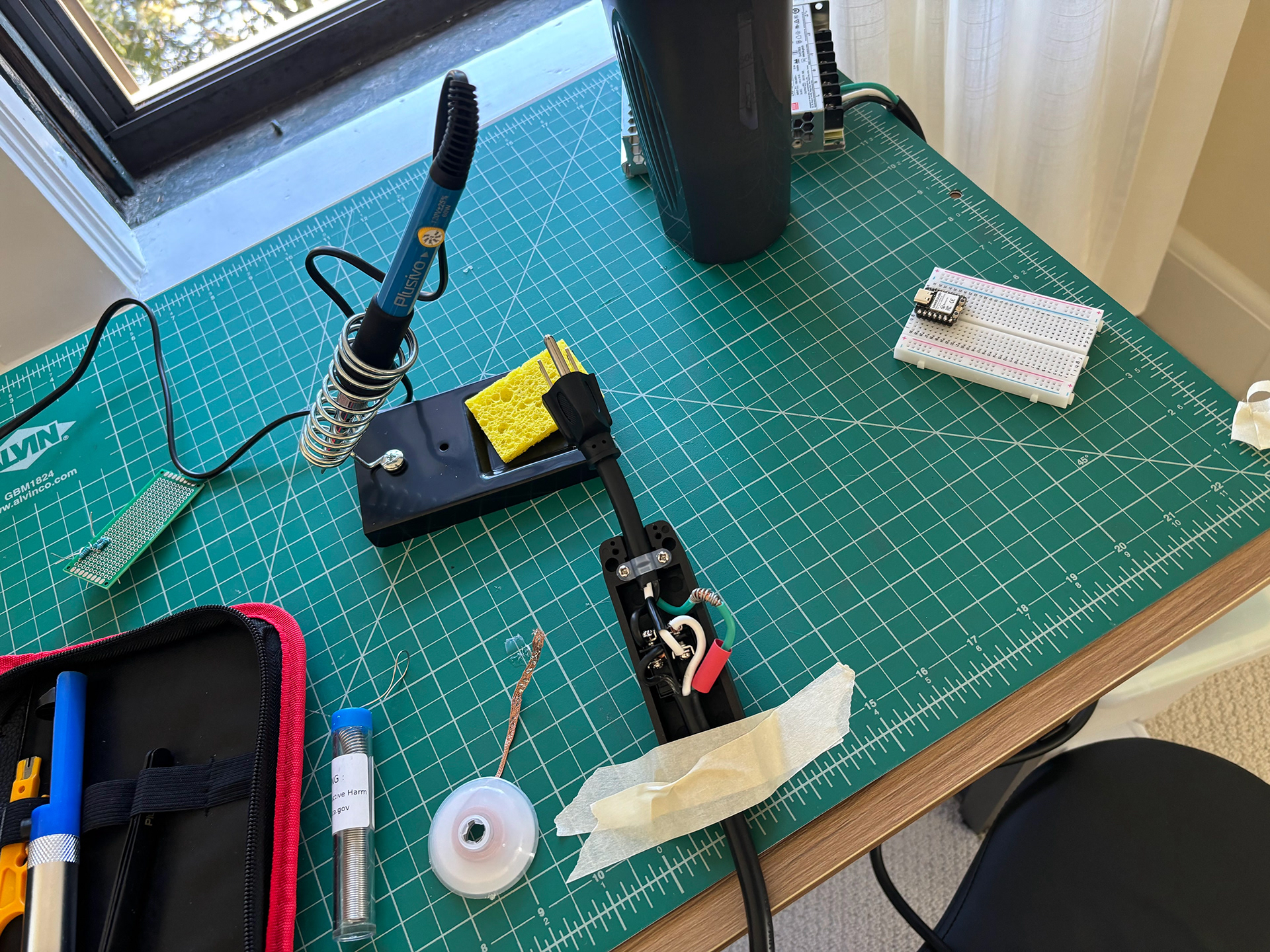
- Solder everything together — burn yourself, inhale lead, desire to have an actual studio space with real ventilation
- Secure lights in holders — these models are technically snapfit, but you can make them permanent with superglue
- Secure lights to mirror — superglue your printed parts (with LED strips inside) to edges of mirror
- Create fiber bundles — sand, cut, and group optical fiber bundles into 88 bundles consisting of 15 strands, each 26" long
- Bond fiber bundles — use UV resin to secure fiber bundles to the LEDs housed in the printed parts
- Program modes — the fun part!
Outcome